
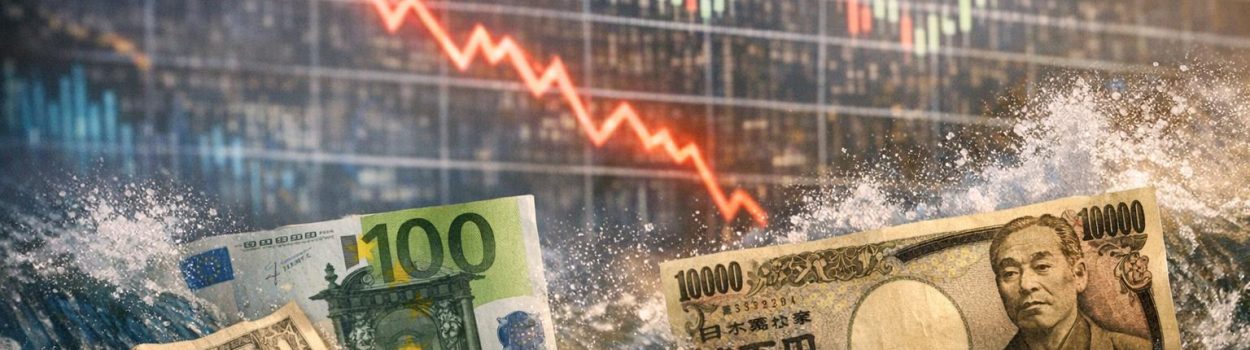
Currency volatility refers to the degree of variation in the exchange rate of one currency relative to another over a given period of time. In modern financial systems, exchange rates fluctuate continuously as global markets react to economic data, policy decisions, geopolitical developments, and shifts in investor sentiment. Understanding currency volatility is essential for policymakers, businesses engaged in international trade, institutional investors, and individual market participants. Exchange rate variability influences capital allocation, pricing strategies, funding structures, and macroeconomic stability. In an interconnected global economy, even localized events can propagate through foreign exchange markets within minutes.
The foreign exchange market operates on a decentralized, over-the-counter basis, spanning major financial centers across different time zones. Trading activity continues twenty-four hours a day during the business week. This continuous operation contributes to the speed with which new information is incorporated into currency prices. As a result, volatility may arise not only from scheduled announcements but also from unexpected developments that alter risk assessments or economic projections.
Definition and Measurement of Currency Volatility
Volatility in currency markets measures how much and how quickly exchange rates move. It is commonly expressed as the standard deviation of returns over a specified time frame. Higher volatility indicates larger price swings, while lower volatility suggests relatively stable exchange rates. Analysts typically evaluate volatility on daily, weekly, monthly, or annualized bases, depending on the purpose of analysis.
There are two primary types of volatility measures: historical volatility and implied volatility. Historical volatility is calculated using past exchange rate data to estimate how much a currency pair has fluctuated. This backward-looking measure provides a statistical representation of realized variability. Market participants often examine rolling historical volatility to detect changing market regimes or clustering effects, where periods of heightened movement are followed by calmer intervals.
Implied volatility, in contrast, is derived from currency option prices and reflects market expectations of future fluctuations. Because option premiums incorporate compensation for anticipated risk, implied volatility represents a forward-looking metric of uncertainty. When implied volatility rises significantly above historical levels, it may signal expectations of upcoming events or structural shifts. Conversely, compressed implied volatility may indicate market complacency or confidence in policy stability.
Volatility can also be described in absolute or relative terms. Some currency pairs, particularly those involving major reserve currencies with large and liquid markets, often exhibit lower average volatility compared to emerging market currencies. Cross-currency pairs that do not include the U.S. dollar may display distinct volatility patterns depending on trade linkages and capital mobility.
Determinants of Currency Volatility
Monetary Policy and Interest Rates
Monetary policy decisions are central to exchange rate dynamics. When central banks adjust policy interest rates or alter liquidity conditions, they influence capital flows and investor expectations. A rise in interest rates can attract foreign capital seeking higher yields, potentially strengthening the domestic currency. Conversely, rate cuts or expansionary measures may reduce yield differentials and contribute to depreciation pressures.
Central bank communication plays an equally significant role. Forward guidance, policy transparency, and deviations from expected actions can either dampen or amplify currency movements. If financial markets are uncertain about the policy trajectory, even minor changes in language may generate noticeable exchange rate reactions. Major events such as adjustments in asset purchase programs, shifts in inflation targets, or foreign exchange interventions often coincide with temporary spikes in volatility.
Interest rate differentials between countries remain a core driver of exchange rate expectations. In theoretical models such as uncovered interest parity, anticipated differences in returns help shape currency valuations. When expectations shift abruptly, volatility increases as markets reprice assets to reflect revised projections.
Economic Indicators
Macroeconomic data releases frequently act as catalysts for currency movements. Indicators such as gross domestic product growth, employment statistics, inflation rates, industrial production, and retail sales provide insight into economic momentum. Markets often react not merely to the data itself but to deviations from consensus forecasts.
If inflation exceeds expectations, investors may anticipate tighter monetary policy, strengthening the currency in the short term. Alternatively, weaker employment data may reinforce perceptions of economic slowdown, prompting depreciation. The magnitude of volatility typically depends on the relative importance of the indicator and its implications for monetary policy.
High-frequency data releases can also interact with algorithmic trading systems. Automated models rapidly interpret numerical surprises and execute trades, increasing short-term fluctuations immediately after publication. Although liquidity in major currency pairs is generally deep, abrupt order flows during data releases can widen spreads and intensify price movements.
Political Developments and Geopolitical Risk
Political uncertainty remains a significant source of exchange rate variability. Elections, policy reforms, fiscal negotiations, and regulatory changes may alter investor perceptions of long-term economic stability. When political events generate uncertainty about taxation, trade policy, or institutional governance, risk premiums embedded in the currency may rise.
Geopolitical developments such as cross-border conflicts, sanctions, or disruptions to trade routes can produce sustained volatility. Investors may reallocate capital away from regions facing instability toward jurisdictions perceived as politically and economically stable. Currency markets tend to respond quickly to such developments because they directly affect trade flows, capital movements, and economic growth prospects.
Market Sentiment and Speculation
Short-term currency movements are frequently shaped by investor positioning and sentiment. The foreign exchange market accommodates a broad range of participants, including commercial banks, hedge funds, multinational corporations, central banks, and retail traders. Speculative positioning can amplify price movements when participants enter or exit trades simultaneously.
Leverage is a notable characteristic of currency markets. Because foreign exchange trading often involves margin accounts, relatively small changes in exchange rates can trigger significant gains or losses. During periods of rapid movement, margin calls and stop-loss orders may intensify volatility as positions are unwound.
Broader shifts in global risk appetite also influence currency dynamics. In periods of economic expansion and stable financial conditions, investors may pursue higher-yielding currencies. When financial stress rises, capital may flow into highly liquid reserve currencies. These cyclical changes in sentiment contribute to recurring volatility patterns.
Types of Currency Regimes and Their Influence on Volatility
Floating Exchange Rate Systems
In a floating exchange rate regime, currency values are determined primarily by market forces. Central banks may intervene periodically, but they do not maintain a fixed parity. Floating systems allow economies to adjust to external shocks through price mechanisms. If export demand declines, depreciation may help restore competitiveness.
This flexibility, however, also enables continuous price discovery. Exchange rates respond immediately to changes in interest rates, commodity prices, and capital flows. As a result, floating regimes typically exhibit ongoing, though often manageable, levels of volatility.
Fixed and Pegged Regimes
Under fixed or pegged exchange rate systems, a currency’s value is anchored to another currency or a basket of currencies. Authorities commit to maintaining the peg through foreign exchange reserves and policy measures. Day-to-day fluctuations may be limited, creating an appearance of stability.
Over time, however, economic divergences may generate pressure on the peg. If inflation, fiscal deficits, or external imbalances weaken confidence, speculative attacks can occur. When maintaining the peg becomes unsustainable, abrupt devaluations or revaluations may lead to sharp volatility during the transition period. Historical episodes of currency crises illustrate the risks associated with prolonged misalignment under rigid regimes.
Impact of Currency Volatility on International Trade
Exchange rate volatility affects exporters and importers by altering the domestic currency value of revenues and costs. Firms that invoice in foreign currencies face uncertainty regarding future cash flows. When volatility is elevated, pricing decisions and contract negotiations may incorporate additional risk premiums.
Multinational enterprises often manage exchange rate exposure through operational diversification and financial hedging. Natural hedging strategies involve aligning costs and revenues in the same currency, while financial instruments such as forwards and options provide contractual protection. Despite these measures, unexpected fluctuations can still influence profit margins and investment planning.
Long-term trade relationships may adapt to moderate volatility, particularly when institutions are strong and financial markets are developed. However, extreme currency instability can discourage cross-border commerce by complicating cost forecasting and reducing investor confidence.
Financial Market Implications
Portfolio Investment and Capital Flows
International portfolio allocation decisions incorporate expectations regarding currency performance. Investors in foreign equities or bonds are exposed to exchange rate fluctuations in addition to asset-specific risks. If a domestic investor purchases foreign securities, total returns depend partly on subsequent currency movements.
High volatility may increase hedging costs, reducing the attractiveness of certain markets. Conversely, stable currency conditions can promote cross-border capital flows. Nonetheless, extended periods of suppressed volatility may encourage excessive risk-taking, potentially leading to abrupt adjustments when conditions change.
Derivative Markets
Currency derivatives, including forwards, futures, swaps, and options, facilitate both risk management and speculation. Implied volatility derived from option pricing models serves as a benchmark for market uncertainty. Rising volatility increases option premiums, reflecting the higher probability of large price movements.
During episodes of financial stress, liquidity conditions in derivative markets may tighten. Wider bid-ask spreads and reduced market depth can reinforce exchange rate swings. Financial institutions monitor these dynamics closely to manage counterparty exposure and regulatory capital requirements.
Emerging Market Currencies and Structural Factors
Emerging market currencies often display higher average volatility than those of advanced economies. Structural factors such as commodity dependence, external financing needs, and evolving institutional frameworks contribute to this pattern. When global commodity prices fluctuate sharply, export revenues and fiscal balances in resource-intensive economies may shift accordingly.
External debt denominated in foreign currencies may amplify vulnerabilities. If the domestic currency depreciates significantly, debt servicing burdens can increase, affecting both public and private sector balance sheets. This dynamic may further reinforce volatility through capital outflows and risk repricing.
Countries with credible policy frameworks, diversified economies, and adequate foreign exchange reserves typically demonstrate greater resilience. Over time, structural reforms and improved transparency can moderate excessive volatility and enhance investor confidence.
Safe-Haven Currencies and Volatility Dynamics
Certain currencies are characterized as safe-haven assets because of their liquidity, strong institutional backing, and stable macroeconomic environments. During periods of global uncertainty, demand for these currencies may increase as investors reduce exposure to higher-risk assets.
This reallocation of capital can generate volatility in currency pairs involving both safe-haven and higher-yielding currencies. Safe-haven appreciation may be pronounced during global financial stress, while reversals may occur when conditions stabilize. Over time, structural changes in fiscal sustainability or economic performance may influence safe-haven status.
Policy Responses to Excessive Volatility
Authorities may respond to excessive exchange rate fluctuations through various tools. Direct foreign exchange intervention involves central bank purchases or sales of currencies to influence market dynamics. Indirect measures include adjustments to interest rates, communication strategies, or regulatory policies affecting capital flows.
Sustained stabilization generally depends on addressing underlying macroeconomic imbalances. Sound fiscal policy, credible monetary frameworks, and transparent governance structures enhance confidence and reduce the likelihood of destabilizing volatility. International cooperation may also contribute to stability when coordinated policy actions align expectations across major economies.
Technological Developments and Market Structure
Technological innovation has significantly reshaped currency trading. Electronic communication networks, algorithmic systems, and high-frequency trading platforms enable rapid execution and large transaction volumes. These developments enhance efficiency and narrow spreads during normal conditions.
However, automated strategies can respond simultaneously to new information, potentially intensifying short-term price movements. Flash episodes characterized by sudden and temporary dislocations illustrate how market structure interacts with volatility. Regulatory frameworks continue to evolve to address these dynamics while preserving market liquidity.
The emergence of digital currencies and exploration of central bank digital currency initiatives introduce additional considerations. While their long-term effects remain uncertain, changes in settlement processes and cross-border payment systems may gradually influence volatility patterns.
Long-Term Trends and Structural Shifts
Over extended horizons, exchange rate behavior reflects broader structural transformations in the global economy. Shifts in trade integration, demographic evolution, technological productivity, and energy markets influence relative growth trajectories. As economic weights change, demand for particular currencies in trade invoicing and reserve holdings may adjust accordingly.
Structural reforms that promote productivity growth, fiscal discipline, and institutional transparency contribute to sustained currency stability. Conversely, persistent inflation differentials or policy uncertainty may elevate baseline volatility. Exchange rate regimes, financial openness, and capital market development further shape long-term patterns.
Currency volatility remains an inherent component of open financial systems. While moderate fluctuations facilitate adjustment and reflect active price discovery, pronounced or disorderly movements may create economic challenges. Effective risk management, informed policy decisions, and credible institutions remain central to navigating the evolving landscape of global exchange rate dynamics.